REPORT 01
Calculate backwards from planting out
A worked tomato example explains the two clocks in a seed-starting schedule—and why a date window is not a promise.
The Seed Window planning library
Six worked reports on seed-starting schedules: what the dates mean, how to check them, and how to put them to work.
Date arithmetic + source review + real interface walkthroughs. How we checked the examples ↓
A worked tomato example explains the two clocks in a seed-starting schedule—and why a date window is not a promise.
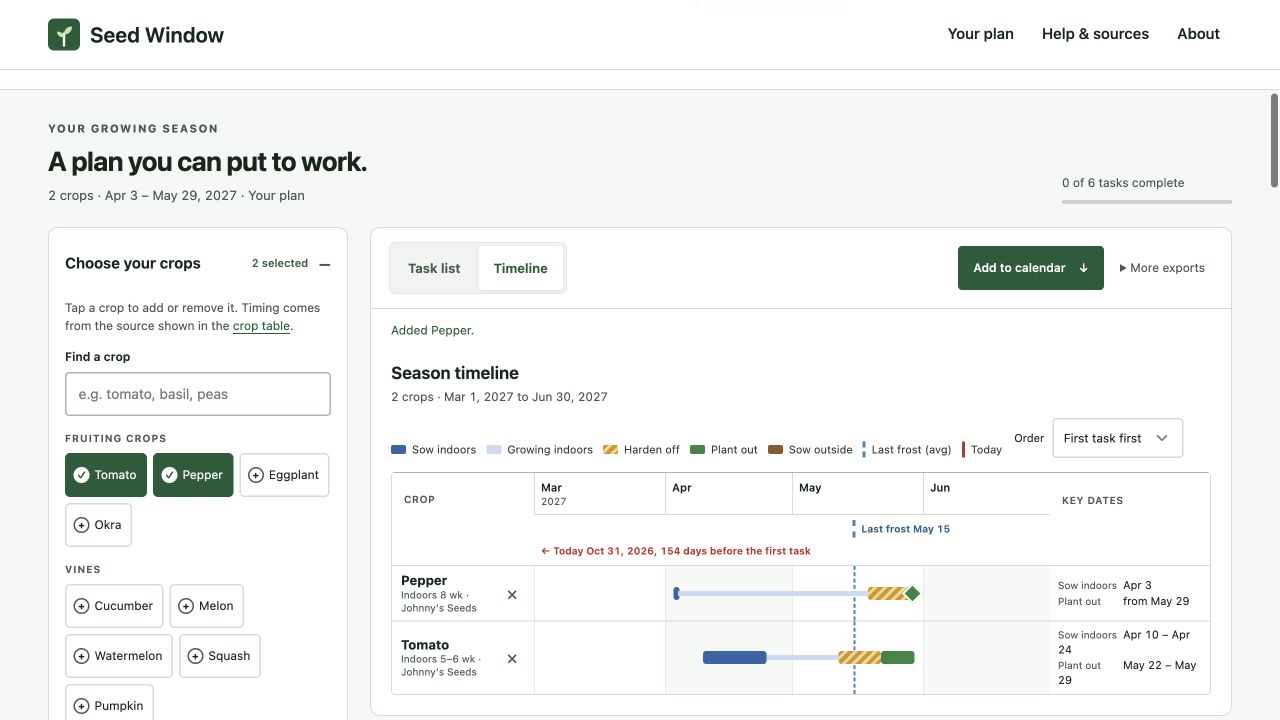
Start tomato seeds indoors 3–5 weeks before your last frost date and peppers 6 weeks before. Worked dates, a university cross-check and how to fix a transplant target.
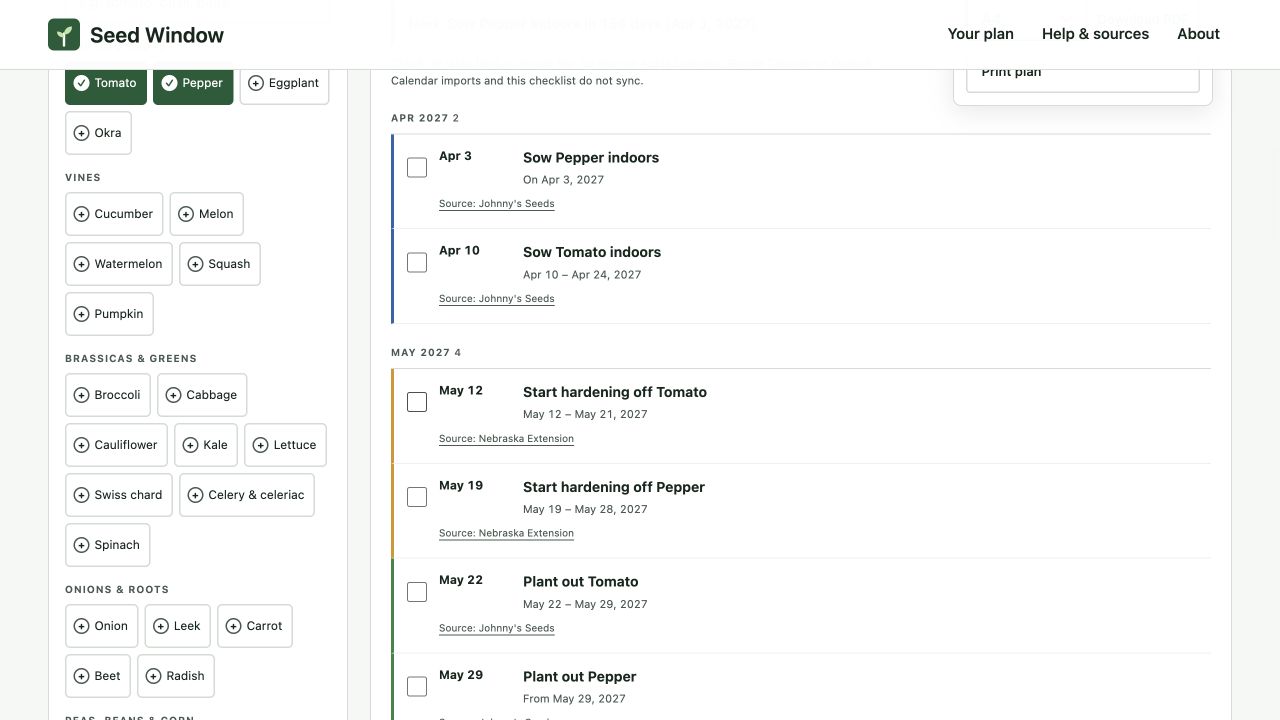
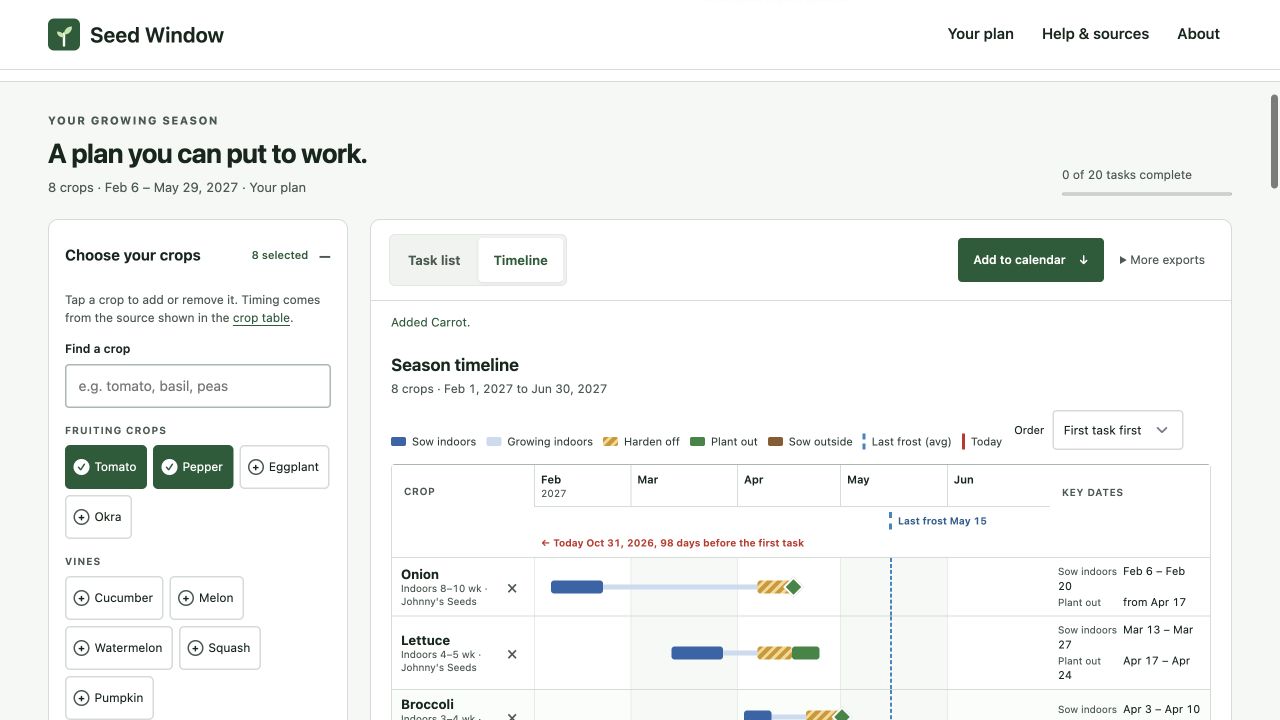
A tomato case separates the planner’s ten-day window from a weather-responsive outdoor routine, including what happens when planting is delayed.
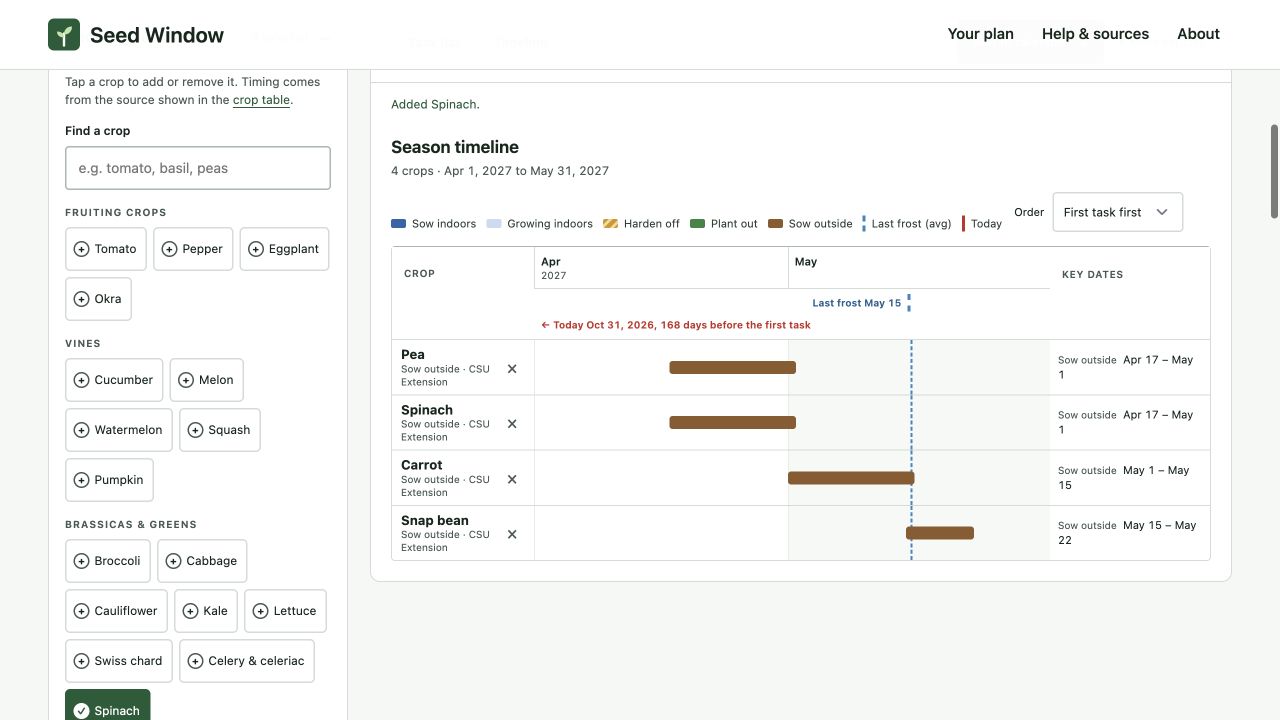
Compare peas, carrots, beans and transplanted tomatoes under the same frost date, with source-specific windows and a method-selection checklist.
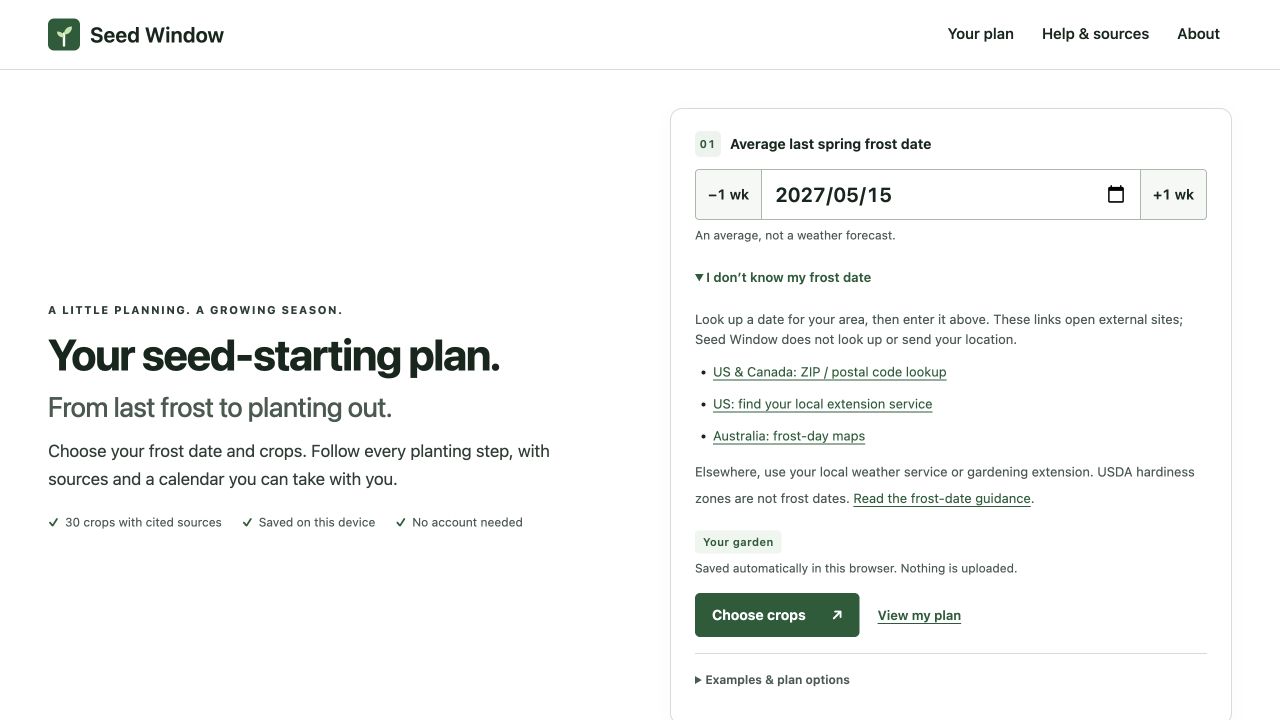
Separate winter-hardiness labels from spring frost risk, then test how a seven-day input change moves a 30-crop plan.
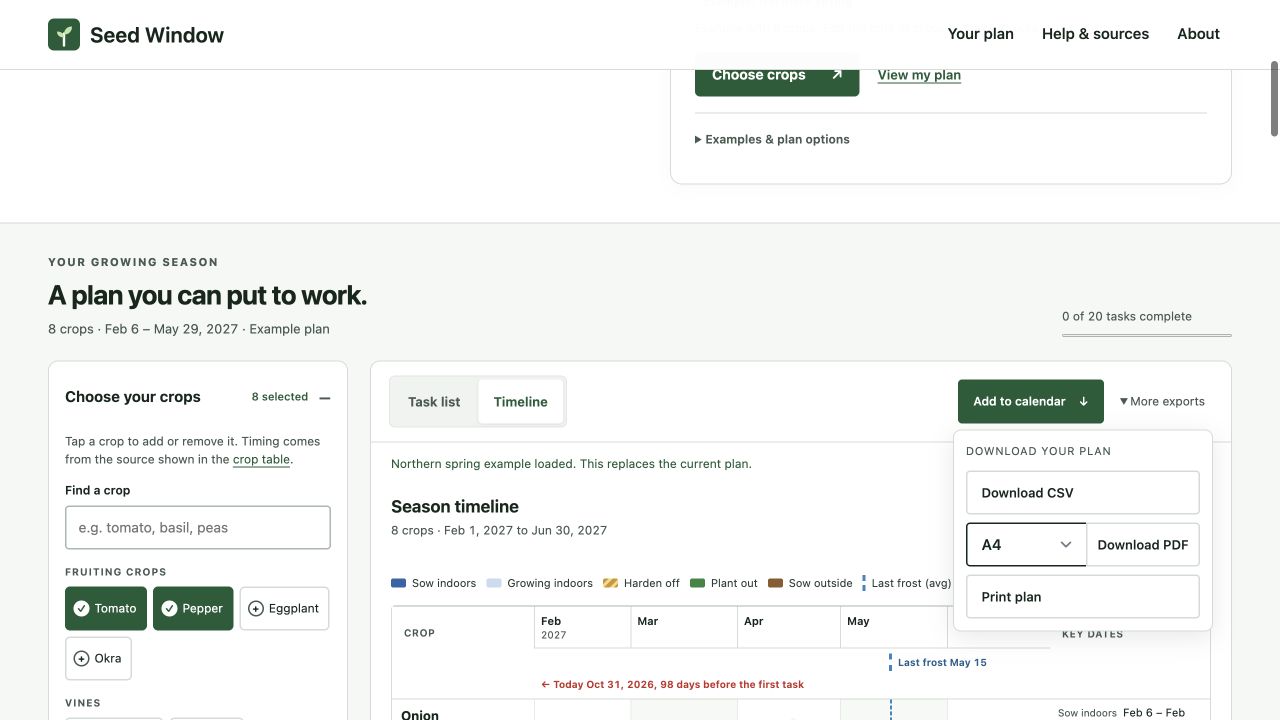
Inspect a 20-event ICS, understand first-day reminders and duplicate imports, and choose between a calendar, crop CSV and printable vector PDF.
Method & evidence
These reports analyse Seed Window’s existing 30 crop rules. We evaluated all 30 for three hypothetical spring frost dates—May 8, May 15 and May 22, 2027—and checked that every populated action-date field moved by seven days with the input. The crop rules’ stored sources are Johnny’s Selected Seeds, Colorado State University Extension and Nebraska Extension. Other linked sources support specific distinctions such as winter-hardiness zones and calendar-file semantics.
We also inspected the eight-crop example’s 20-event ICS, a version with one completed task excluded, crop CSV and A4/Letter vector PDFs. Screenshots show the calculator on 31 October 2026 using synthetic plans; the later Saved plans and backup controls are not shown. These are deterministic calculations and file checks, not a physical garden, printer or yield experiment. Google Calendar import directions follow Google’s documentation; no reader’s calendar account was accessed.
The articles are prepared by the team that builds the tool. We do not claim independent horticultural review. Crop, variety and location advice can differ; retain your seed packet and local extension guidance, and verify current conditions before planting.
90-row calculation dataset (JSON)30-crop baseline (CSV)Calculation & file checks
Try the calculator →